Liminalities in Art
Liminality (from Latin limen, "threshold") is the state in between. The mental state of transition, uncertainty, a mixture of sadness and joy, of closing one chapter of life, and fears and hopes for the future. Liminal Space is the physical embodiment of the in-between feeling, while liminal state refers more to the abstract emotional frame of mind of uncanny nostalgia and ambiguity of new phases in life.
The visual representation in culture and art of liminal space is often shown in transitional spaces in architecture, framing technique, and familiar to multicultural viewers, nostalgic settings that seem like they were seen before. Even though the term is relatively new, introduced by French anthropologist Arnold van Gennep in his 1909 book Les Rites de Passage1 and widely accepted in the 1960s thanks to the work of anthropologist Victor Turner, we see signs of liminality everywhere in the art world.2
One of the earliest examples is the use of transitional arches in Greek classical architecture, beautifully portrayed in Masaccio's painting, The Holy Trinity (1427-28). he depth of the arch and its positioning, achieved through the linear perspective technique, make us ponder upon what is beyond, creating a sense of wonder.
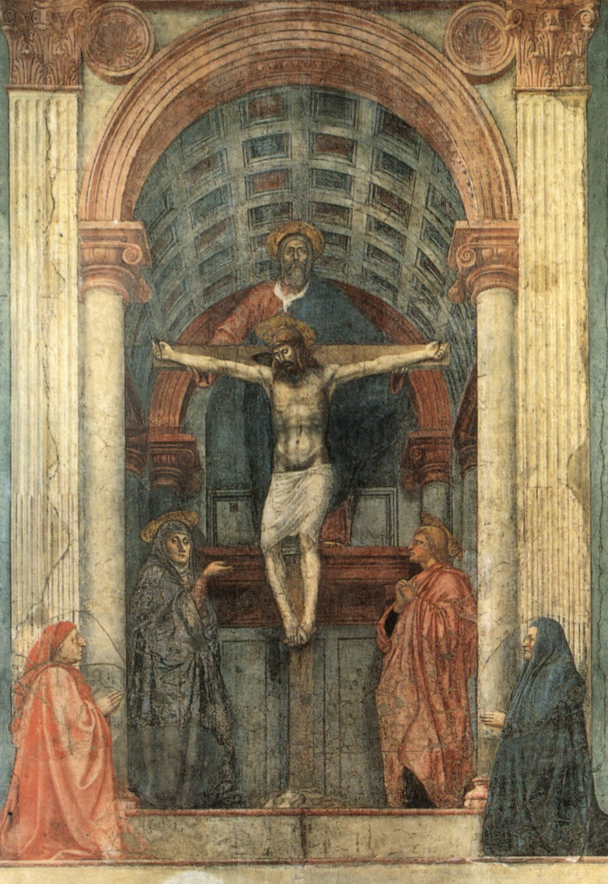
Masaccio, Holy Trinity, 1424, fresco (https://www.italianrenaissance.org/masaccios-holy-trinity/)
The other, probably the most famous example, is The School of Athens by Raphael (1509–1511), painted almost a hundred years later than Masaccio, in a whole new era in art - the Renaissance. In Raphael’s painting, the arch is not used to stir up gazes to the Holy Cross and thoughts to the Divine. Rather, the artist is praising human knowledge and wisdom, the power of education. The arch in this painting bridges together pagan philosophy and Christian faith in the private room of a revolutionary for his progressive views, Pope Julius II.
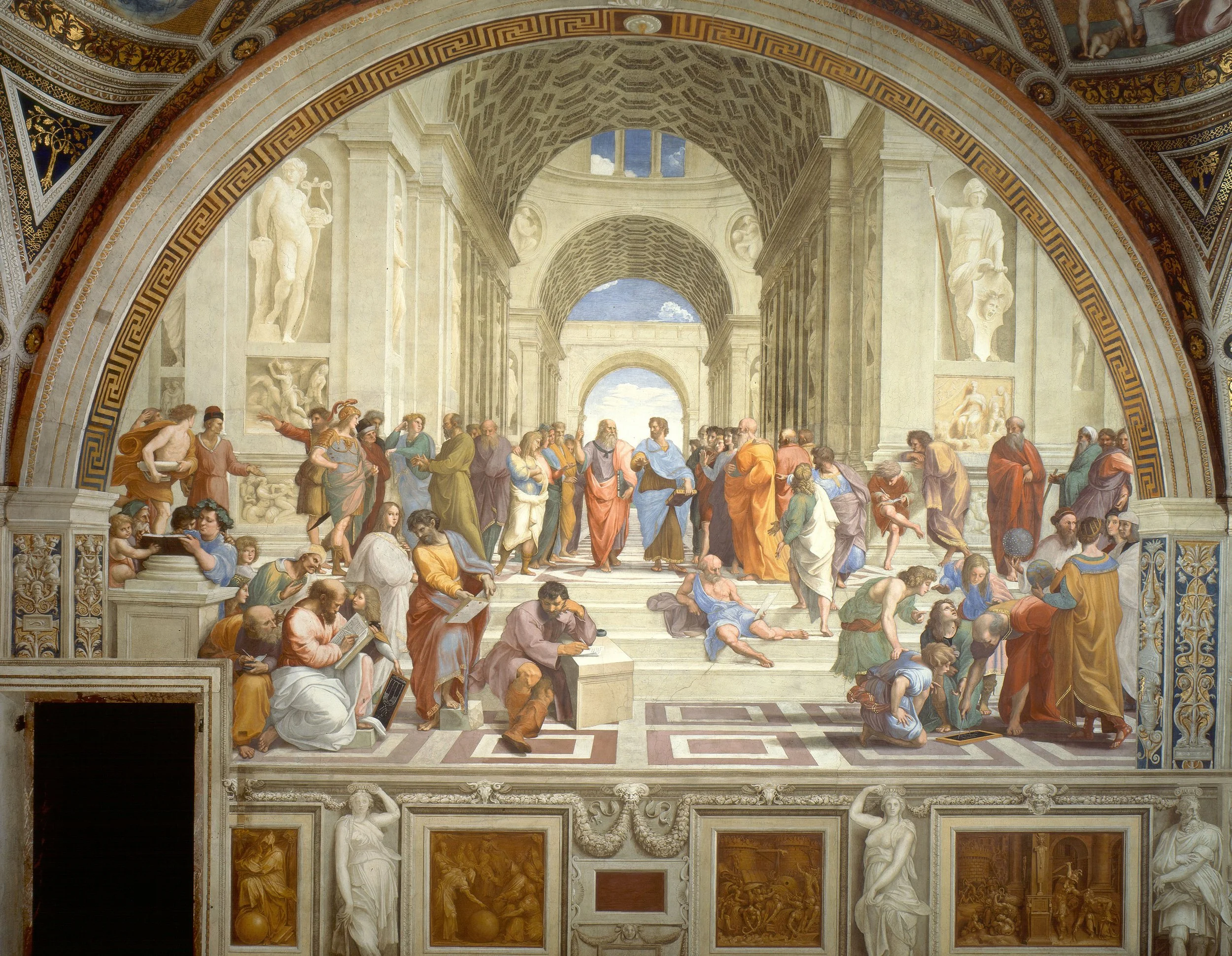
Raphael, The School of Athens, (1509-1511), fresco
The other technique used in art to convey the message of transition, or to guide our attention towards a certain scene, is framing. Some of the most profound art movement that aligned with liminality as a mental and soul state and showed it in the perfect way is Romanticism. Landscape with a Lake by Washington Allston (1804) is a masterpiece that encourages introspective contemplation. We don’t see the subject’s face, and it makes it easier to relate and imagine ourselves in the landscape. The proportion of a small person and vast trees and overwhelming mountains reminds us how tiny we really are compared to the majesty of nature. Yet the framing places the subject in the heart of the painting, making sure that the story is not merely about a beautiful landscape, but it is about a personal journey and feelings.
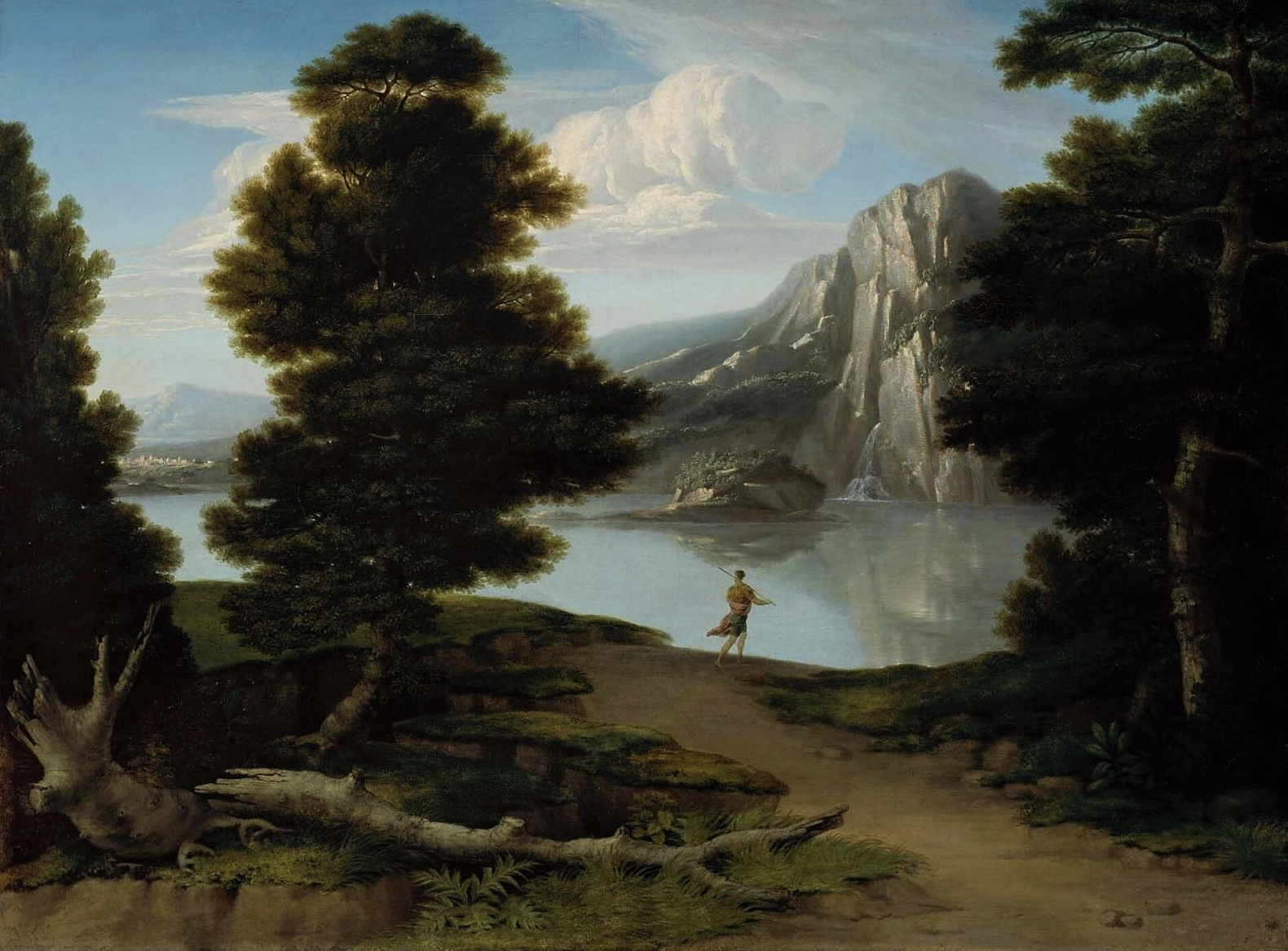
Washington Allston, Landscape with a Lake (1804), Oil on canvas
Maestro of Romantism Caspar David Friedrich explores the sublime beauty of nature and our connection to creation. How we experience the Divine through solitude and being surrounded by nature, its uncontrollable forces, and majestic beauty. Caspar David Friedrich’s The Wanderer Above the Sea of Fog (1817-1818) depicts a lonely figure who has turned his back to the viewer, gazing out into the horizon. As Simay Gökbayrak, PhD, beautifully stated on her page: “The Romantic painter Caspar David Friedrich (1774–1840) captured this sensibility with great depth. His landscapes are not mere representations of nature; they are meditations on the human condition.”3

Caspar David Friedrich, The Wanderer Above the Sea of Fog (1817-1818), Oil on canvas
Depicting liminal space in the spaces that combine arches, transitional architecture, and framing has been an overwhelmingly popular trend among Gen Zs, especially popular online are conceptual photographs of spaces that evoke the feeling of nostalgia and the paradox of déjà vu. The article on the web page Gen-Zine discusses the surge in liminal space photography and how it relates to the modern art world and culture, leaving us wondering why that could be and how the trend will progress over time.4
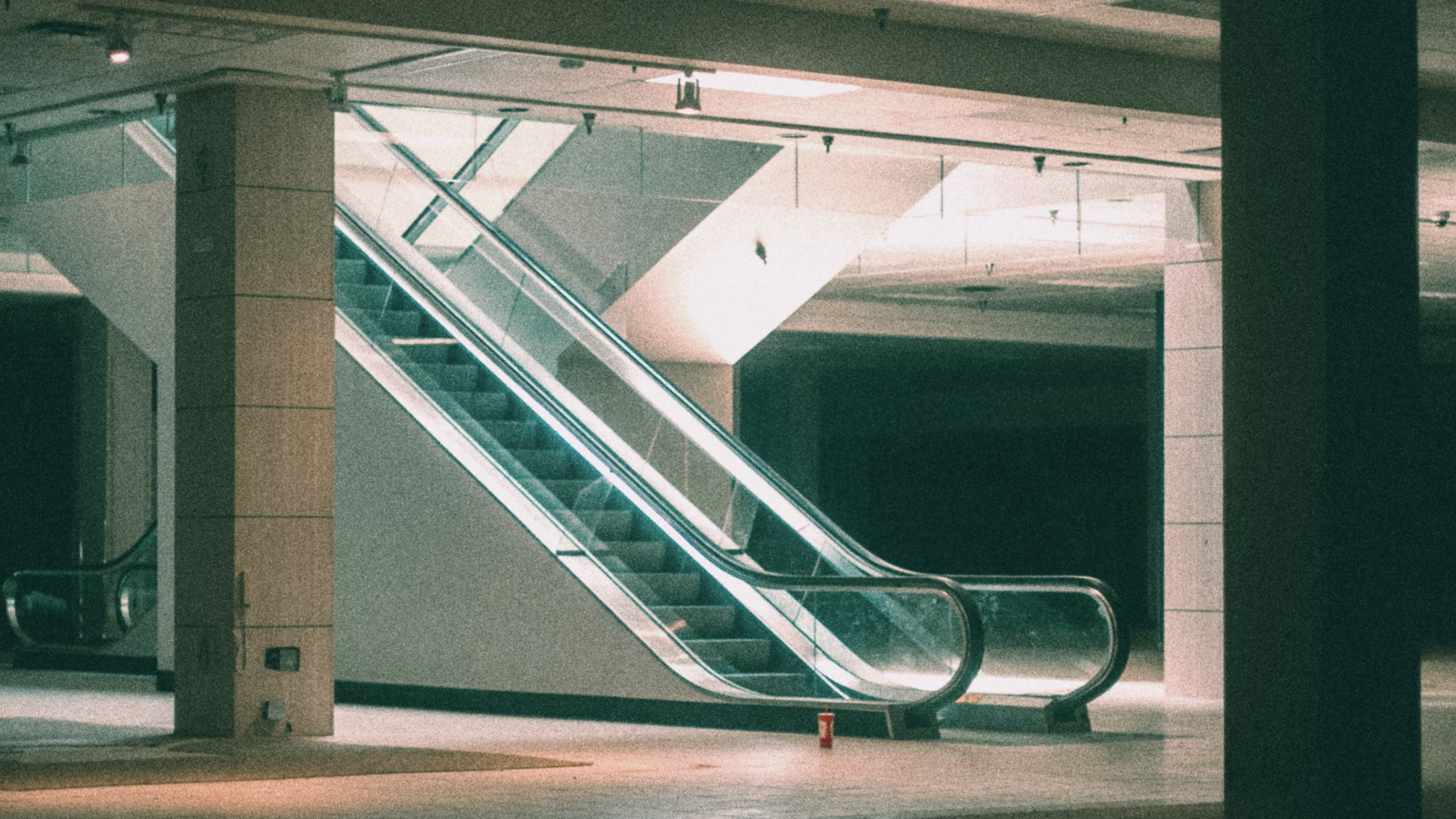
Photo by Sam Operchuck on Unsplash
Besides the obvious physical representation of liminal space through arches, framing, or transitional spaces, liminality can be translated through themes and feelings of the subject that relate to the viewer. Being on-hold, waiting between seasons, feeling mentally stuck in the past, fearful for the future, and not being able to be fully present now. William Catling, a Southern California-based artist and sculptor, in his work, explores the theme of soul stages and the heavy, deep matters of the heart that navigate common human experiences. As you view his work, some, if not most of it, makes you almost uncomfortable. However, these tough contemplations give you a chance to find answers to questions your soul hasn’t dared to ask before. A series of clay sculptures, “Weight of Memory,” is a phenomenal example of how living in the past can delay us from moving forward, yet in the past, there are anchors that make us who we are today. This series embraces the idea that we do not just exist at an exact point of time, but in some metaphysical way, inside of each one of us, there is a baby, a teenager, and a future older self.
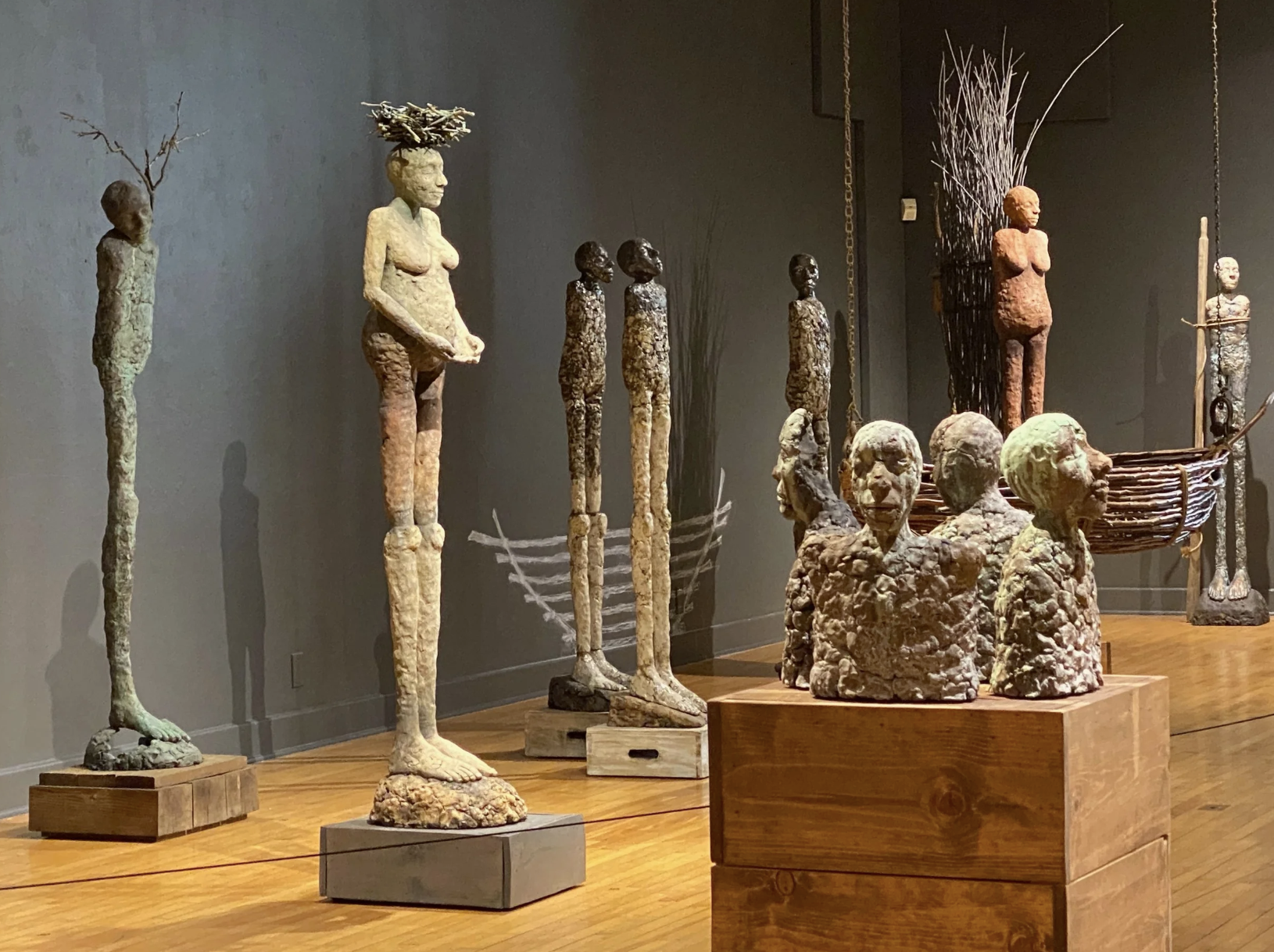
William Catling, clay, https://williamcatling.com/the-weight-of-memory
Ilya and Emilia Kabakov, in their installation Treatment with Memories (1998), reconstructed a Soviet-era hospital. Seeing this made my blood cool for a second, as it reminded me of days when I spent hours navigating those two-toned green and white, poorly-painted mazes. Sometimes it is strange how places elsewhere bring you home, make you stop for a minute, and kick you down memory lane.
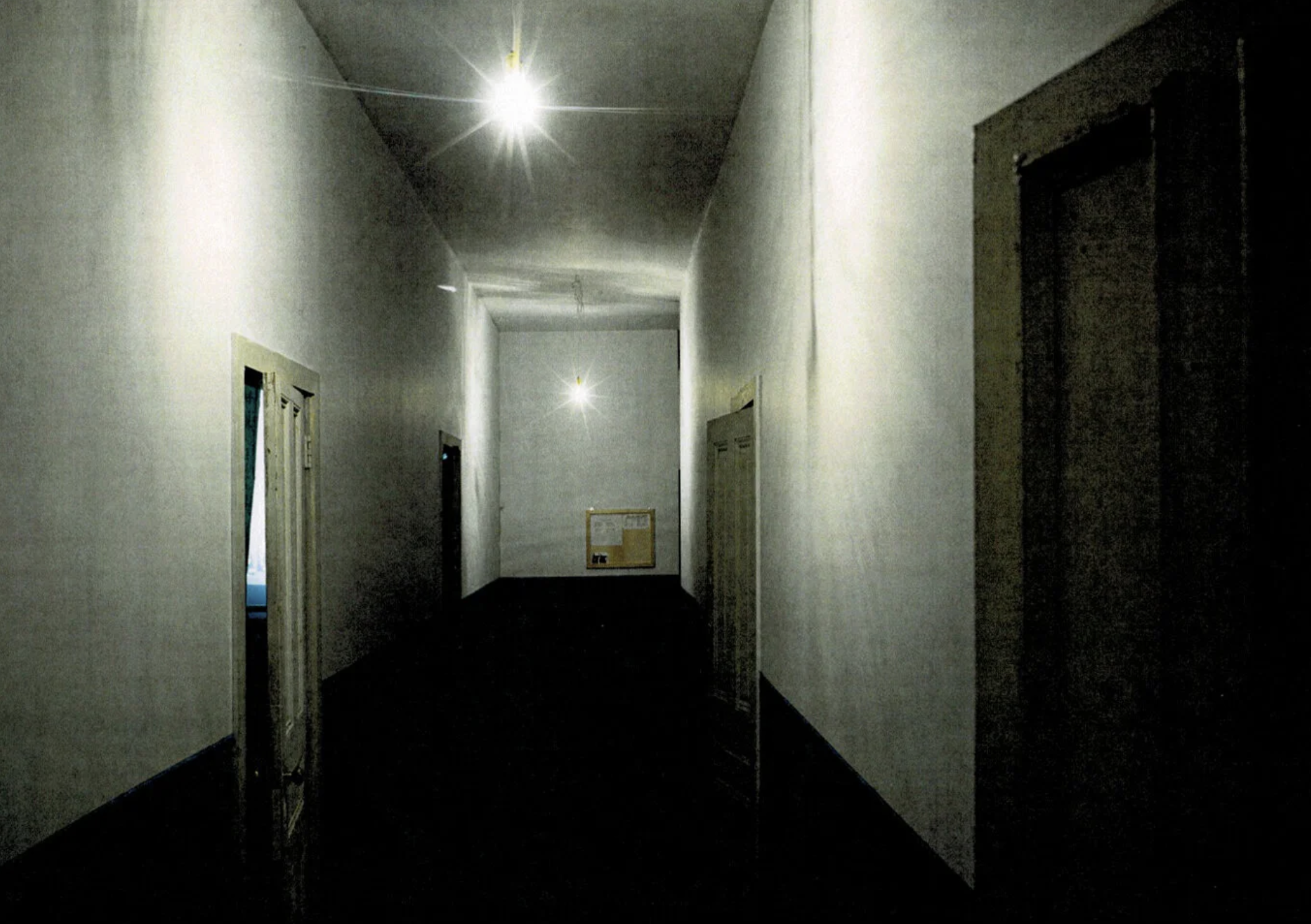
The familiar feeling arises when you look at the artwork as it unfolds like a story. Edward Hopper comes to mind when I think about liminality, the moodiness of his work, deep, emotionally-charged subjects awaken the feeling of not knowing what is coming next. There is quite a despair in his work, fear of the future that, I am sure, all of us could feel once in a while. Cape Code Evening (1939) is one of the greatest examples of that. Subtle elements suggest that something is amiss, that there is more hidden from us than shown, perhaps the artist is communicating with us his deep concerns. There is something unsafe and unhopeful about this painting. The details uncovering the story are: stark contrast between the dark wood by the house and the pale gray house, grass, house that looks like something is hidden inside. A woman and a man are in the same backyard together, but feel miles apart from each other. They are waiting for something, possible change, perhaps a brighter future, unfulfilled dreams.
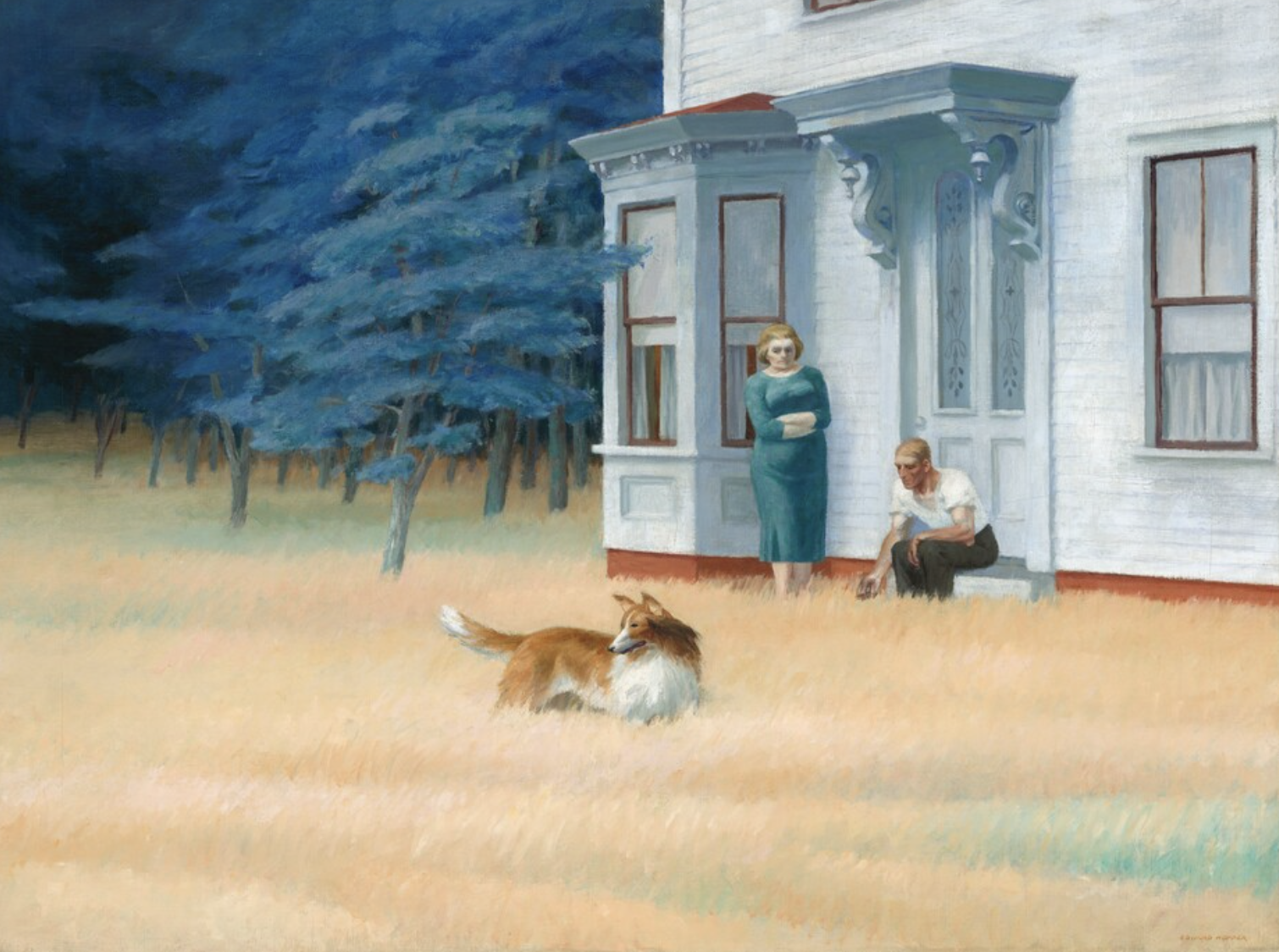
Edward Hopper, Cape Cod Evening (1939), Oil on canvas
Longings of our souls, being uncomfortable in the waiting, is a core of liminal art. Liminality is a prominent thread in the history of art because art is a space where contemplation takes place, where time stops, and we are given a chance to look and see. We as humans share many common experiences and fears that are at the core of our existence. Art is a way for us to cope with these feelings, whether we are on the creative side or the viewer. There is always hope in the making, and in the seeing. Acknowledging the liminal state/space, pausing and staying still for a little while is a good practice to navigate some of the seasons that seem unending and uncertain. Just patiently and one step at a time. I would like to end with a poem by Christine McDougall 5:
Liminal.
On the threshold.
The space between.
Where the questions tug.
And the next step is not yet formed, but forming…